89% of security breaches in manufacturing happen at entry points. Yet most facilities still rely on 20th-century access control. The result? Unauthorized access, contamination risks, compliance headaches, and zero accountability.
Today’s visitor management and access control systems address the question: not only who is at the gate, but who got in, when, where they went, and whether they were supposed to be there. In manufacturing facilities in India, particularly in pharmaceuticals and food processing, controlled entry is a must. Regulators demand it. Clients expect it.
Why Access Control Is Critical in Industrial & Cleanroom Environments
Any breach in a controlled environment could stop the entire production process. Check out what may be lost if you fail:
- Controlling cross-contamination, if just one unauthorised access to a controlled area takes place, it could cause contamination of the entire batch in the food or pharmaceutical plant.
- Good manufacturing practice (GMP) and Schedule M compliance require logs of all movements. Failure can result in audits and shutdowns.
- Cleanroom requirements are for controlled access. Clean room monitor and access control safeguard the product and certification.
- Tracking movement minimises the risk of theft and sabotage by providing real-time location information of people in all areas.
Key Challenges in Managing Visitors and Delivery Personnel
Visitors are the most dynamic security factor. They are not familiar with procedures, unvetted, and often unaccompanied. Common gaps include:
- Lack of standardised ID card checks
- Access to areas other than those received by delivery personnel
- Incomplete or tamperable paper logs
- Lack of immediate notifications of unauthorised movement
- Lack of audit trails for inspections
A digital visitor management system takes the guesswork out of visitor management and provides audit trails.
Core Components of an Effective Access Control System
A secure, controlled access system is a multi-layered hardware and software system in three layers.
a) Identity Verification
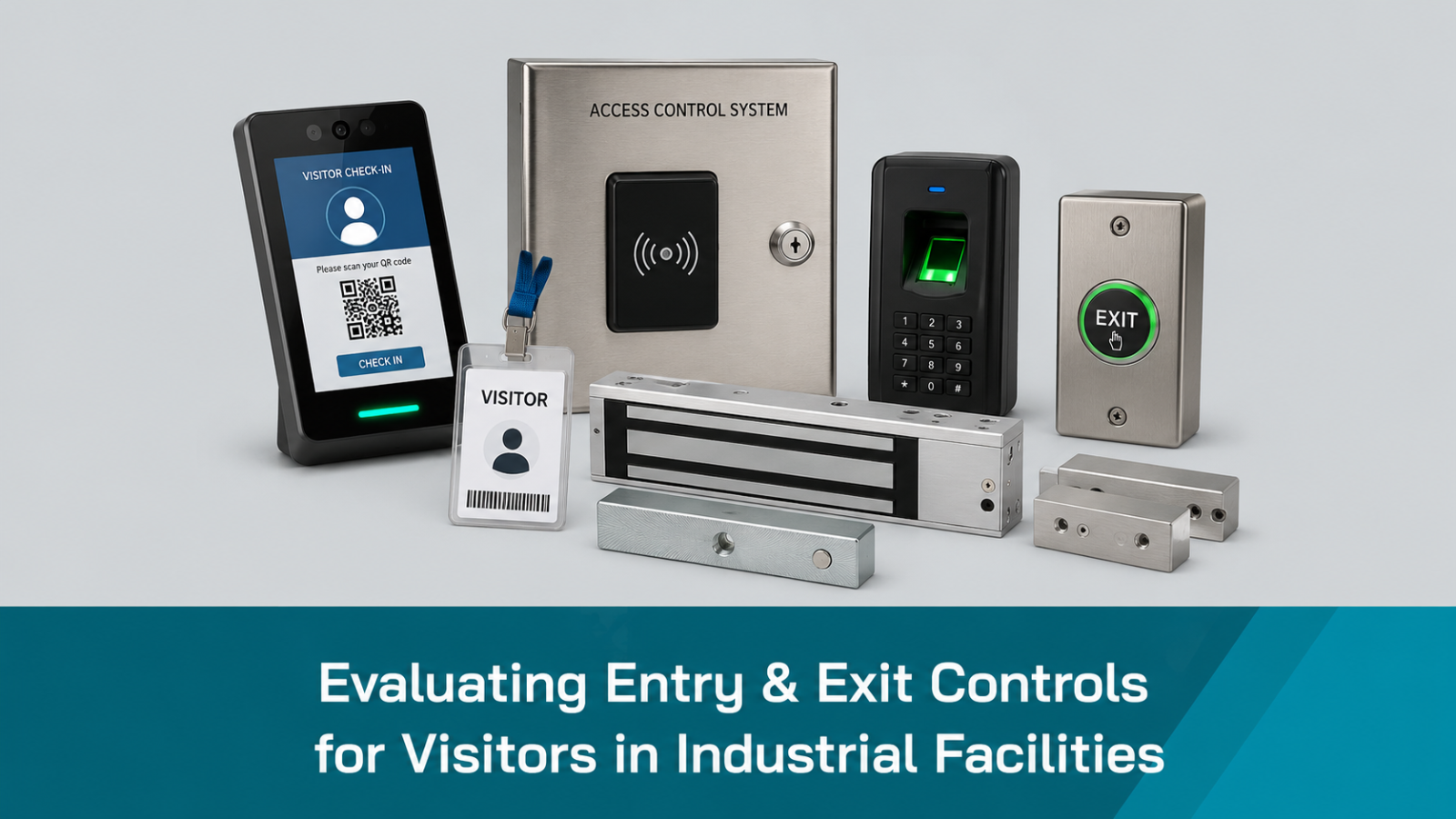
- Biometrics for employees could be fingerprints, irises, or facial recognition.
- Smart cards or RFID for vendors and contractors.
- One-time passwords (OTP) or QR codes for new visitors through a smart access control system.
b) Physical Barriers
- Electromagnetic lock: Fail-secure or fail-safe locking mechanism with no mechanical wear and tear. Ideal for high-traffic industrial entry points where reliability and durability are critical.
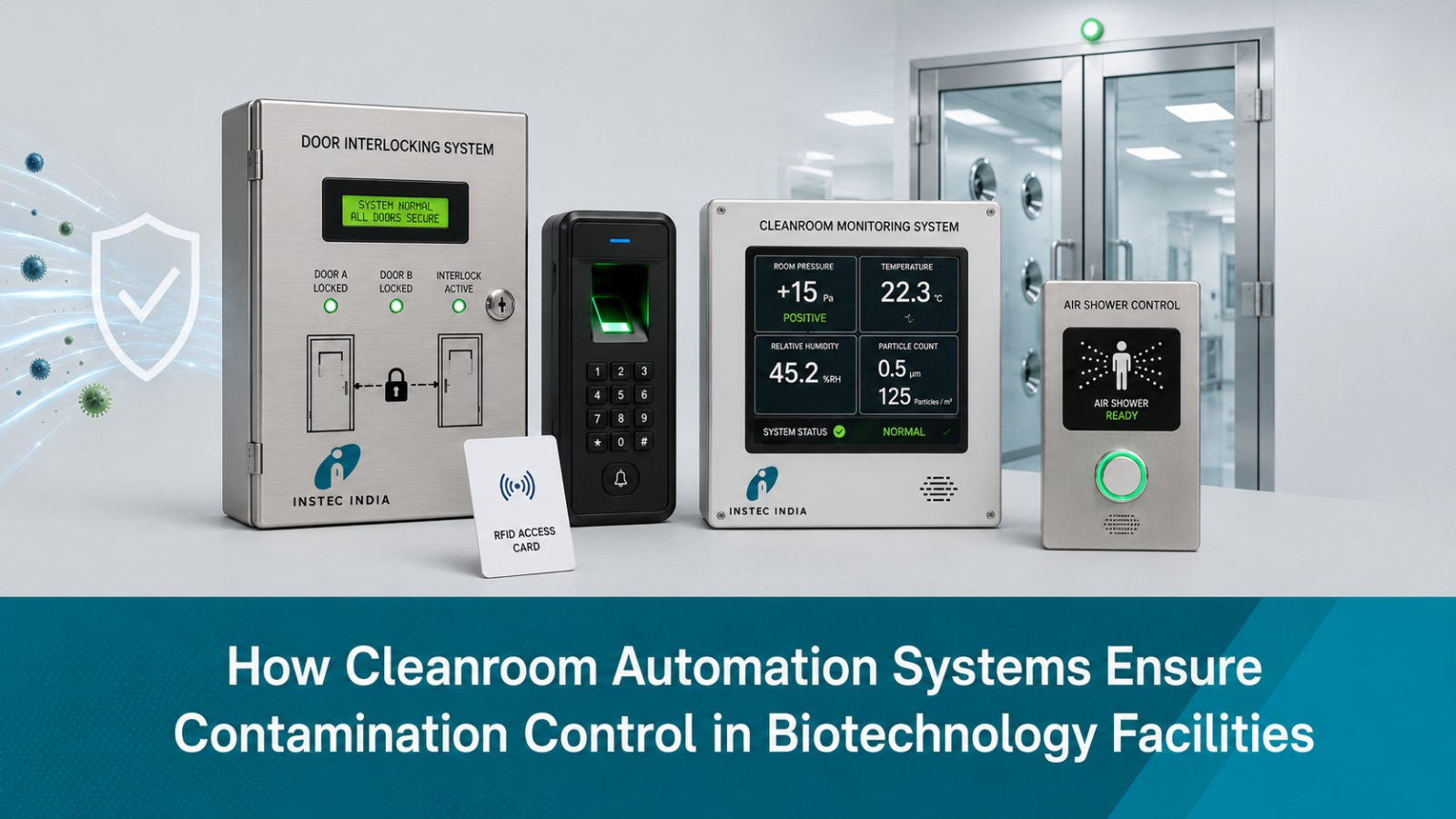
- Door interlocking system: Ensures two doors cannot be opened simultaneously, creating secure airlocks. Prevents unauthorized access and maintains environmental control in sensitive areas.
- Automated gate control: Controls vehicle and people entry at gates.
- LED status indicators: Visual status of lock and zones.
c) Monitoring & Logging
- Audit trail and activity logs track all activity – who, where, and when.
- Real-time movement dashboards provide security with an overview.
Role of Electromagnetic Locks in Access Control
The electromagnetic door lock is based on the magnetic force (usually 280-600 kg holding force) and has no moving parts. It can be easily integrated with readers, timers, and electronic control systems.
In the case of pharma, an electromagnetic lock combined with a door interlocking system for pharma, ensures that clean areas are not exposed to dirty areas. This is a GMP compliance and Schedule M compliance requirement.
The Impact of Automation in Modern Access Management
Manual logs fail at scale. Automation solves the bottleneck:
- Automated gate control pre-registers visitors and auto-expires credentials after their visit
- Intelligent access control pre-approves visitors and auto-revokes access after their visit
- Industrial security systems integrate with HR to automatically remove access on contract expiry
- Electronic visitor management produces audit reports on the fly
Automation does not eliminate security personnel; it makes their jobs easier and frees them from administrative tasks.
How to Evaluate Your Current Access Control System
Already have a system? Run this checklist:
- Do you have an audit trail for any day in minutes?
- Do logs record unsuccessful as well as successful attempts?
- Do you have a door interlocking system that prevents multiple doors from being opened?
- Do em locks and readers have a service plan?
- Do visitors have time- and area-restricted access?
- Do you track movement for reporting?
After checking, if it turns out that you have responded with a “no” to two or more questions, then you really should be addressing the issues.
Common Mistakes and Best Practices
Usual Errors
- Putting readers in place with no software – readers that don’t record
- Having only one type of credential
- Not deactivating after the employee leaves or changes jobs
- Not using a 2-door interlocking system for airlocks
Best Practices
- Regular reviews of all access rights (every 3 months)
- Multi-factor authentication biometric lock systems for high security areas, and cards for other areas
- Electronic control system back-up in case of a power outage
- Know how to lock and unlock door points at all times of the day
Use Cases Across Industries
Pharma: A door interlocking system for pharma with electromagnetic door locks and biometric access ensures sterile zones are cleanroom compliant, GMP compliant and Schedule M compliant.
Food Processing: Cross-contamination is prevented through zone-based visitor access and LED door status indicators to give supervisors door status.
IT & Data Centres: 2-door interlocking system for a mantrap at the server room. Logs are automatically exported for reporting.
Chemical Plants: Industrial security systems link gas sensors to lockdowns. People tracking ensures exclusion zones are empty before processes.
Conclusion
Access control is no longer a luxury; it is a necessity for any establishment willing to make quality, safety, and compliance its three main values. Be it an electromagnetically locked controlled door or a digital visitor management system, all the moves you make will certainly help in raising the level of security and accountability.
The best time to upgrade your access control is now. Modern systems deliver immediate value: better compliance tracking, operational visibility, and the confidence that your facility is secure and accountable. The first step is to assess the situation at your facility. Next, address the issues one secured door at a time. Start with solutions like Instec’s door interlocking systems by implementing them where they matter the most.
FAQs
A door interlocking system prevents two doors from being open simultaneously. In pharmaceutical manufacturing, it helps prevent air from entering sterile or cleanroom areas, helping to ensure GMP compliance and Schedule M compliance. A 2-door interlocking system is typically used for single airlocks.
An electromagnetic door lock is based on magnetism. This makes it more reliable, quicker to operate, and simpler to connect to electronic security systems. There are no parts to malfunction or break down – perfect for busy access points in manufacturing facilities.
Use an electronic visitor management system to pre-register visitors, issue time-limited badges, and keep track of visitors inside and outside. Complete the system with gate identification and tracking software for full coverage.
An audit trail logs all access activity – successful access, unsuccessful access, door held open, and exit times. It logs user, access point, and time. This information is critical for inspections, investigations, and Schedule M compliance reporting.
First, categorise entry points according to risk perimeter, internal, restricted, and critical. And then implement multiple layers of security: automated gate control for perimeters, biometric access control for restricted areas, and electromechanical locks with LED indicators for real-time monitoring of all critical doors.
Yes. Smart access control systems are now available in scalable setups to fit all facility sizes. A simple configuration of electromagnetic locks, card readers, and cloud-based audit logs can be implemented economically in small manufacturing units and scaled up as needed.