One little error can halt a whole production line in a busy factory. It could cost you lakhs of rupees in losses, whether you are operating a plant in Pune or a workshop in Gujarat; a sensor failure will cost you. The unseen components that ensure smooth operations are industrial sensors.
It is not merely a matter of shifting elements from one place to another. It is keeping your costly equipment secure and safeguarding your employees. Outdated, inexpensive sensors often generate false alarms and fail when needed most. Indian businesses must stop using quick-fix tools and adopt trusted industrial automation systems to stay ahead.
What is an Industrial Sensor?
Consider an industrial sensor to be the eyes of a machine. It detects or perceives such things as light, distance, or metal and transmits a signal to the brain of the machine.
For example, a proximity switch informs a conveyor belt to halt since a box has been received. Automation would not be possible without these sensors. You would need to do it manually, which would increase errors and slow down the speed of work.
Types of Industrial Sensors, Where to Use Them, and Why
Some sensors just aren’t suitable for all types of locations. You should find the one that best fits your environment:
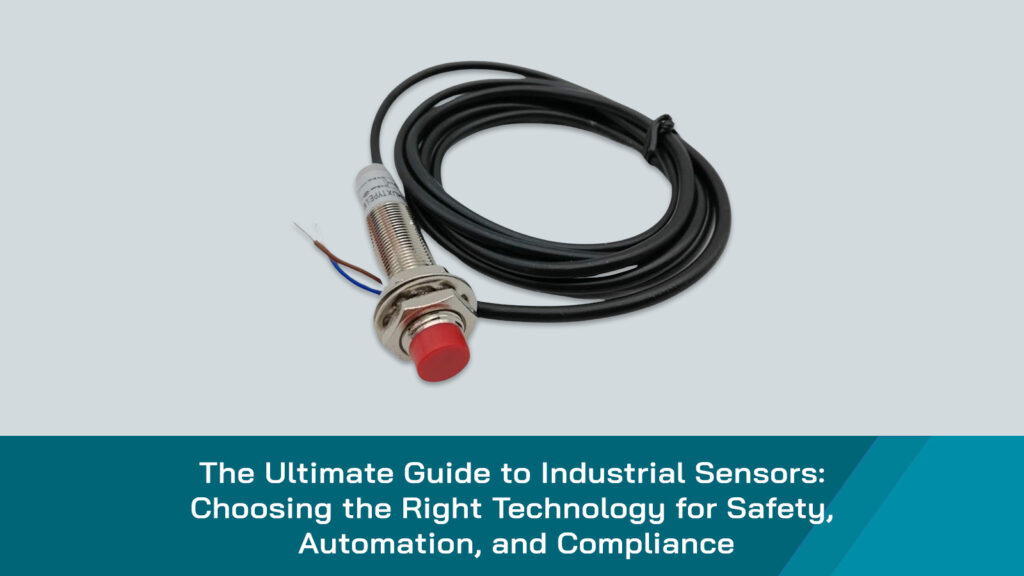
- Industrial Proximity Switch: These sense things without touching them. They are very tough. They are useful in dusty or oily environments where a standard switch would have become stuck.
- Magnetic Proximity Sensor: These are just searching magnets. They are useful in that they can see through plastic or wooden walls to locate a magnet on the other side.
- Photoelectric Sensor (Photo Sensor): These make use of a beam of light. They are most efficient when you need to spot something at a long distance, such as counting bottles on a moving line.
- Human Sensor: These are safety ones. When an employee approaches a machine that is dangerous, it will automatically be switched off immediately to ensure that the employee is not harmed.
How Sensors Work: The Step-by-Step Logic
You do not have to be a scientist to know the working steps of the proximity switch. It normally occurs in three straightforward sections:
- Sending a Signal: The sensor emits light, a magnetic field, or a pulse.
- Striking the Target: An object gets into that field and reflects the signal or blocks it.
- Taking Action: The sensor detects the change and informs the controller to either begin or end the machine.
Where Sensors Are Used Across Industrial Workflows
Our industrial sensors handle many tasks. For food, a photoelectric sensor checks bottle levels. In car plants, an industrial proximity switch aligns frames. Use a photo sensor for worker safety or to stop lifts from hitting the ceiling during industrial applications.
How They Ensure Compliance (IP Ratings & FLP)
The dust and weather in India may be harsh on electronics. The IP ratings are listed when you buy industrial sensors.
- IP67: It implies that the sensor is waterproof and dustproof. You need this when washing floors with water.
- FLP (Flameproof): When dealing with chemicals or gases, FLP sensors are the most suitable as they will not produce a spark and start a fire.
Key Benefits of High-Quality Sensor Integration
Good industrial automation systems are an investment that pays off in a short period of time:
- Reduced Downtime: Good sensors do not fail on a weekly basis. This prolongs the life of your machines.
- Safety Improvement: Accidents are avoided by reliable sensors, which will save you the hassle of legal proceedings and keep your team satisfied.
- Improved Quality: You have the right sensors, and your products are perfect.
Conclusion: Final Thoughts and CTA
The smartness of a machine is as intelligent as its sensors. When you employ a bad proximity switch, your entire line may go dead. Do not allow a low-cost component to spoil your large investment.
We understand what Indian factories require at Instec-India. We assist you in the selection of the appropriate sensors, which are within your budget and adhere to the safety regulations. We do not simply sell parts; we offer solutions that work.
Try our industrial sensors today for better safety, automation, and compliance
FAQs
No. A magnetic proximity sensor detects magnets only. An inductive proximity switch should be used in case you want to locate any kind of metal.
It uses light. It is an excellent long-distance photo sensor for seeing an object several meters away.
When your factory is dry, then a lower rating is okay. When it is dusty or wet, you require a high IP rating such as IP67.
You may purchase industrial sensors at Instec-India. We provide professional guidance to ensure that you acquire the appropriate tool to do your particular job.