Introduction: The Critical Role of Gland Integrity in 2026
In essence, what is a cable gland exactly? Simply, it is a mechanical gadget that facilitates you in firmly fixing and sealing the end of a power cable to a piece of equipment. Besides anchoring the cable tightly and offering strain relief, it also safeguards the enclosure from dust, humidity, and toxic gases.
Industrial safety is not a checkbox in 2026, but the foundation of smart manufacturing. A broken seal not only damages the equipment, but it endangers lives, particularly in dangerous areas. The first step in making sure that your facility is compliant and operational is to use high-quality cable glands and prevent plugs.
Understanding Cable Gland Selection: The Foundation of a Good Seal
The process of selecting the appropriate gland cable solution begins by knowing your environment. A brass cable gland is usually the gold standard in a highly corrosive area because it is durable. But when you are working in explosive environments, you should make sure that your equipment is Atex and IECEx compliant.
Cable glands come in a wide variety of types, including a basic cable gland pg (Panzer-Gewinde) thread type, and high-performance cable gland double compression types. The double compression type is especially essential as it clamps the inner and outer sheath of the cable, which offers additional protection against moisture and gas intrusion.
5 Critical Signs of Cable Gland Failure and Their Fixes
The most appropriate choice of cable glands may fail even when not monitored. Here are the red flags:
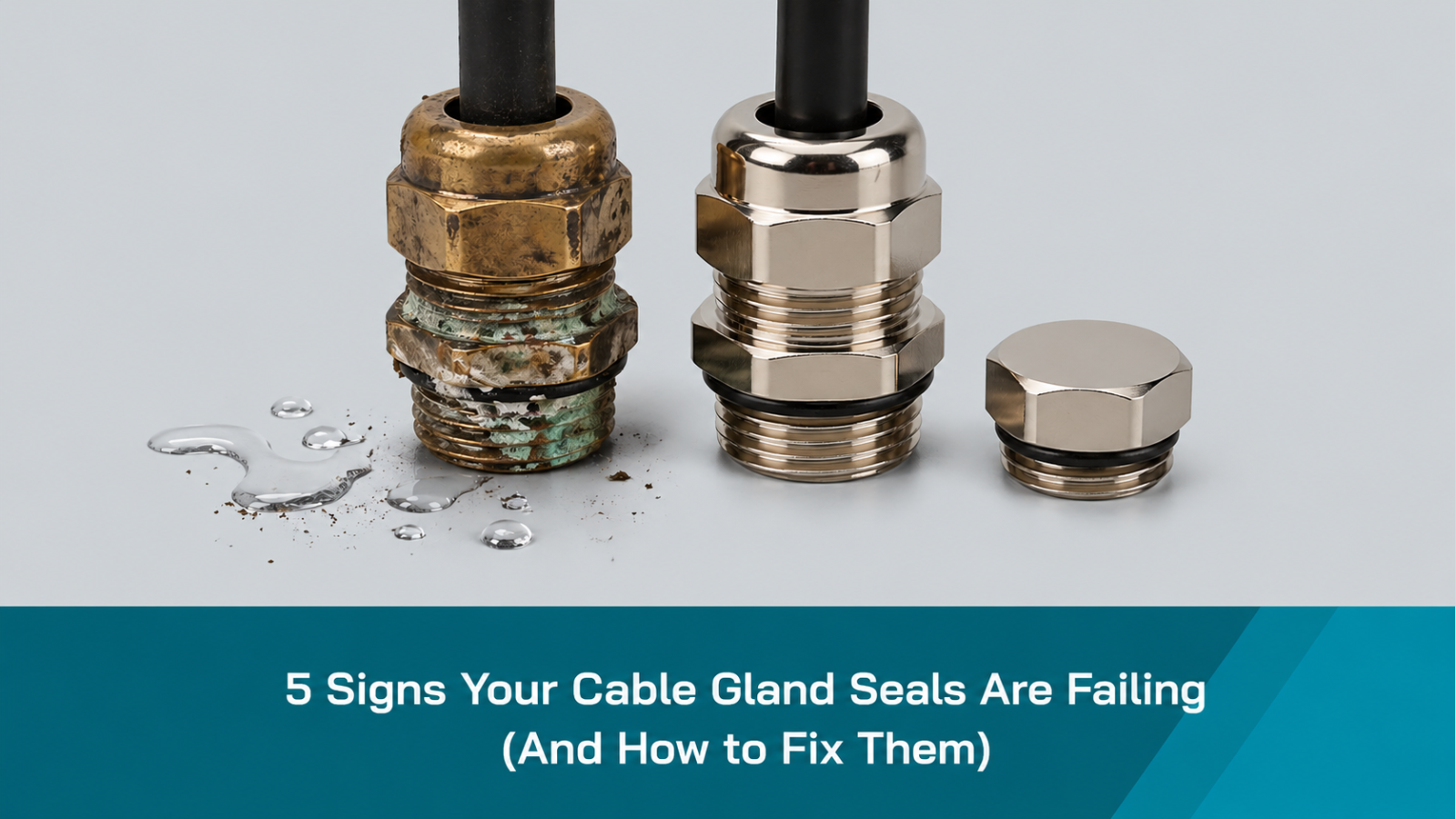
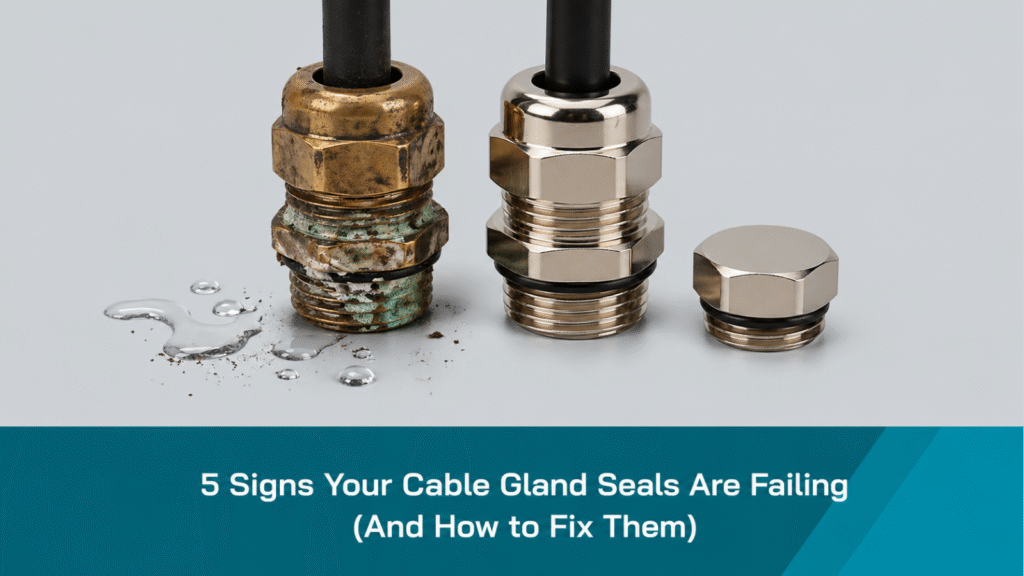
- Color change in Brass Gland: When the brass cable gland your cable is coming out of looks greenish or white due to oxidation, it is most likely an indication that the sealing is broken.
Solution: Change it to a nickel-plated or stainless steel one - Loose Grips- The internal seal is no longer working properly if the cable moves when you pull it.
Fix: Tighten or replace the inner shroud. - Moisture Ingress: Water droplets within an enclosure indicate that the size of cable glands was probably incorrect or the seal has died.
Fix: Check the cable gland size chart and re-install. - Cracked Shrouds: Outer covers may be damaged by heat and UV rays.
Fix: Shrouds are to be covered with weather-proof ones. - Unutilized Entries: The holes that are open are safety hazards.
Fix: A cable gland plug or a stopping plug can be used to close the gap.
Where Different Gland Types Are Used
Type of Gland | Type of primary application | Major benefit |
Flameproof cable gland | Oil & Gas, Mining | Stop internal explosions from escaping. |
Cable gland double compression | Marine & Heavy Industrial | High mechanical strength and moisture seal |
Cable gland pg | European Machinery | Traditional, reliable threading |
Industrial glands | General Manufacturing | Economical strain relief |
How to Conduct a Step-by-Step Maintenance Audit
Your cable glands’ size and integrity should be maintained in an orderly way.
Step 1: First, visually check for cracks, rust or parts that are not attached.
Step 2: Check Certification: Make sure that the Atex or IECEx markings are not lost on the flameproof cable gland.
Step 3: Check the Chart: Check the cable diameter against a cable gland size chart to make sure that the cable diameter has not increased beyond the rated capacity of the gland.
Step 4: Check the Tension: Make sure that the nut is tightened to the required specification of the manufacturer.
Step 5: Close the Spares: Make sure that all empty entries are fitted with cable gland plugs.
Key Benefits of Proper Gland Maintenance
You conserve money when you take time to check your cable glands types. Correct maintenance will avoid short circuits, minimize downtime and will make sure that you comply with stringent industrial safety insurance requirements. It is also good at prolonging the life of your costly heavy-duty cables.
Conclusion: Securing Your Industrial Infrastructure
The weakest link in your facility is all that it takes to bring it down. You save your investment by observing cable glands size and making sure that you use the appropriate flameproof cable gland in hazardous places. Begin your audit of 2026 and close your operations.
FAQs
You must always use a cable gland size chart. Measure the outside diameter of your cable and compare it with the range of the gland, which is called the Clamping Range.
Atex is a compulsory standard of equipment in the explosive atmosphere in the EU, whereas IECEx is a global standard of certification.
These are used with armored cables or where an additional moisture-proof seal of the inner bedding of the cable is required.